
%201.avif)
.avif)

How Do Tenant Improvement Allowances Work
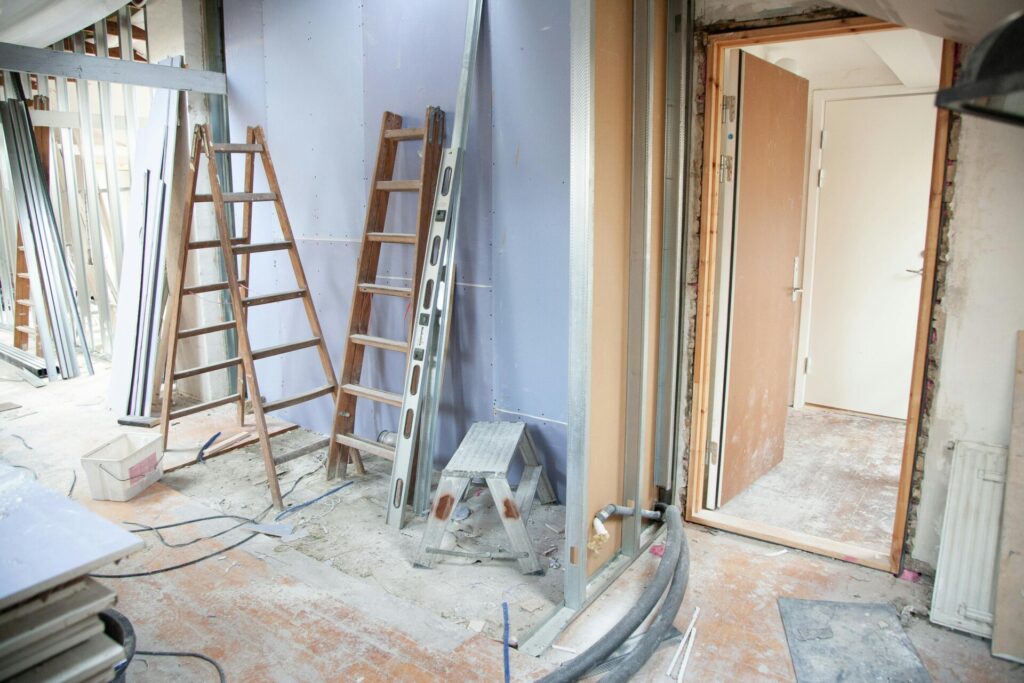
Tenant improvement allowances work by giving the tenant a set dollar amount per square foot from the landlord to cover construction costs needed to customize a leased commercial space. The landlord funds the allowance, the tenant manages or approves the build-out, and the money is disbursed through a structured process tied to verified construction milestones. The allowance is written into the lease, expressed as a per-square-foot figure, and applied only toward approved improvements that become permanent parts of the building. According to Cushman and Wakefield's 2026 Americas Office Fit Out Cost Guide, office fit-out costs across the Americas averaged $149 per square foot in 2026, up 5.5% year over year. That rising cost environment makes understanding how tenant improvement allowances (TIAs) work more critical than ever for both tenants and landlords. This guide covers the full process, from what the allowance includes and how it is calculated to how the money moves during construction, who controls the build-out, and what the current tax rules mean for your bottom line.
What Is a Tenant Improvement Allowance?
A tenant improvement allowance is a pre-negotiated sum of money that a landlord provides to a tenant to pay for construction work needed to customize a leased commercial space. The allowance is calculated as a dollar amount per rentable square foot and is written into the lease agreement before either party signs. For example, a $40 per square foot TIA on a 5,000 square foot office produces a total allowance of $200,000 toward the build-out.
The TIA is not a cash payment. It is a construction budget that the landlord funds and the tenant draws against as work is completed. The allowance covers improvements that become part of the building, such as walls, flooring, electrical systems, plumbing, HVAC modifications, ceilings, and lighting. These improvements remain with the property after the tenant's lease ends, which is why the landlord is willing to fund them. A qualified tenant improvement contractor helps the tenant plan, budget, and execute the build-out within the allowance limits.
What Is an Example of a Tenant Improvement?
An example of a tenant improvement is the construction of private offices, conference rooms, and an open workstation area inside a leased office suite that was previously an empty shell. The build-out includes framing and drywall for interior walls, new ceiling grid and tiles, LED light fixtures, electrical outlets and data drops at each workstation, HVAC duct modifications to serve the new room layout, carpet tile flooring, and paint throughout the space.
Tenant improvements vary by property type. An office buildout typically involves partition walls, private offices, break rooms, and server closets. A retail build-out might include storefront glass, display fixtures, point-of-sale wiring, and customer restrooms.
Restaurant construction projects require commercial kitchen equipment hookups, grease trap installation, exhaust hood systems, walk-in cooler framing, and dedicated plumbing lines that an office space would never need. According to Terrapin Construction Group, basic retail tenant improvement costs range from $40 to $90 per gross square foot in 2026, while restaurant TI ranges from $200 to $500 per gross square foot because of the specialized mechanical and plumbing systems restaurants require.
What Is the Difference Between Hard Costs and Soft Costs in Tenant Improvements?
The difference between hard costs and soft costs in tenant improvements is what each category pays for. Hard costs cover the physical construction work: framing, drywall, flooring, paint, electrical wiring, plumbing, HVAC duct installation, ceiling work, and millwork. Hard costs are the labor and materials that physically transform the space from its current condition into the finished layout the tenant needs.
Soft costs cover the professional services and administrative expenses required to support the construction: architectural drawings, engineering plans, permit fees, plan review fees, construction management, and project inspection costs. Soft costs typically represent 8% to 15% of the total build-out budget, according to industry benchmarks from Terrapin Construction Group. Some landlords limit TIA coverage to hard costs only, which means the tenant pays soft costs entirely out of pocket. Other landlords allow both hard and soft costs to be drawn against the TIA. The lease language determines which expenses qualify, and that language should be reviewed and negotiated before signing.
Items that fall outside both categories and do not qualify under a standard TIA include:
- Furniture, desks, chairs, and workstations
- Computers, phone systems, and IT equipment
- Data cabling and network infrastructure
- Security systems and access control hardware
- Exterior signage and wayfinding
- Moving expenses and relocation logistics
These items are classified as furniture, fixtures, and equipment (FF&E) or tenant-specific operational expenses. FF&E does not qualify because the tenant takes these items when the lease ends. They do not become part of the building.
What Is a Typical Tenant Improvement Allowance?
A typical tenant improvement allowance ranges from $10 to $100 or more per square foot depending on the property type, the condition of the space, the lease term length, and the local market. Office spaces in major metro areas command the highest allowances because they require the most interior customization. Industrial and warehouse spaces receive the lowest allowances because they need minimal interior work.
Property Type / ConditionTypical TIA Range (Per SF)Key Cost DriversClass A Office$50 to $100+Premium finishes, longer lease terms, complex MEPClass B Office$30 to $60Standard finishes, moderate build-out scopeRetail (Second-Generation)$15 to $35Existing walls and systems reduce scopeRetail (New Shell)$30 to $60Full build-out from vanilla or dark shellRestaurant$40 to $100+Kitchen systems, grease traps, exhaust, heavy plumbingMedical Office$60 to $120+Specialized plumbing, HVAC, code complianceIndustrial / Warehouse$10 to $30Minimal interior work, small office carve-outs
Sources: Cushman and Wakefield 2026 Americas Fit Out Cost Guide, JLL 2026 Global Office Fit-Out Cost Guide, The Cauble Group 2026 TIA Ranges, CBRE U.S. Retail MarketView
The condition of the space before construction starts affects the TIA calculation as much as the property type. A second-generation space, one that a previous tenant already built out, saves $20 to $40 per square foot compared to a raw shell condition, according to industry data compiled by Bhumi Calculator. A vanilla shell provides basic concrete floors, drywall-ready framing, and stubbed-out mechanical systems. A dark shell provides only the structural enclosure with no interior finishes, no mechanical connections, and no finished ceilings. The further the space is from move-in condition, the higher the build-out cost and the larger the TIA needed to cover it.
How Much Tenant Improvement Allowance Should a Landlord Offer?
How much tenant improvement allowance a landlord should offer depends on the lease term, the tenant's creditworthiness, the current vacancy rate, the condition of the space, and how much the improvements add to the property's long-term value. A widely cited rule of thumb in commercial leasing is that each additional year of lease term can support an extra $5 to $10 per square foot in TIA, because the landlord has more time to recover the investment through rent.
A reasonable TIA typically lands between 25% and 150% of one year's base rent, according to The Cauble Group's 2026 analysis. Below 25% and the landlord is likely leaving money on the table in a competitive market. Above 150% and the landlord is taking significant equity risk on a single tenant relationship. Landlords in markets with high vacancy rates offer more generous TIAs to attract tenants and fill empty space. Landlords in tight markets with low vacancy have less incentive to negotiate. CBRE's U.S. Retail MarketView reported that landlord TI allowances in core retail markets tightened by 8% to 15% in early 2026, reflecting stronger landlord positioning in low-vacancy retail markets.
How Are Tenant Improvement Allowances Paid?
Tenant improvement allowances are paid through one of three primary methods: reimbursement, direct payment, or rent credit. The payment method is defined in the lease and determines who controls cash flow during the build-out.
With reimbursement, the tenant pays contractors as work is completed and then submits invoices, lien waivers, and inspection documentation to the landlord for repayment. The landlord reviews the documentation and releases funds, typically within 30 to 60 days. This method gives the tenant full control over contractor selection and construction decisions, but it requires the tenant to carry the construction costs until the landlord reimburses.
With direct payment, the landlord pays the contractors directly as construction milestones are verified. The tenant approves invoices and the landlord writes the checks. This protects the tenant's cash flow but gives the landlord more oversight over the construction process, vendor selection, and spending pace.
With a rent credit, the TIA is not paid against construction invoices at all. Instead, the landlord reduces the tenant's monthly rent by a set amount over an agreed period to offset the cost of improvements the tenant funded independently. This method is less common for large build-outs because it requires the tenant to fund the entire construction upfront.
Regardless of payment method, landlords typically hold 5% to 10% of the TIA as retainage until the build-out is fully complete, all inspections pass, and the tenant provides a certificate of occupancy and final lien waivers from every contractor and subcontractor who worked on the project. The retainage protects the landlord from mechanics lien claims filed by unpaid subcontractors after the project closes.
How Do Landlords Typically Handle Tenant Improvements?
Landlords typically handle tenant improvements through one of three arrangements: a tenant-controlled build-out, a landlord-controlled build-out, or a turnkey delivery. The arrangement is negotiated as part of the lease and determines who manages the construction process from start to finish.
In a tenant-controlled build-out, the tenant selects their own commercial general contractor, manages the construction timeline, approves all spending, and tracks the TIA budget. The landlord reimburses approved costs against the allowance. This structure gives the tenant the most control over design, materials, contractor quality, and schedule. We manage tenant-controlled build-outs regularly and find that tenants who maintain direct oversight of the construction process get closer to budget and closer to their design intent than tenants who hand the process entirely to the landlord.
In a landlord-controlled build-out, the landlord manages the project using their own contractors and construction team. The tenant provides input on design and approves plans, but the landlord controls bidding, contractor selection, and daily construction management. This structure can limit the tenant's flexibility on finishes and vendor choice.
A turnkey build-out is a variation where the landlord agrees to deliver the space fully constructed to an agreed-upon set of plans by a specific date. The tenant receives a move-in-ready space without managing any construction. Turnkey arrangements are often tied to higher base rent because the landlord absorbs the construction risk, timeline risk, and management overhead. The Cauble Group notes that turnkey works well for tenants without construction experience, but it trades control for convenience.
How Long Does a Tenant Improvement Build-Out Take?
A tenant improvement build-out takes anywhere from 6 weeks for a basic office refresh to 6 months or more for a full build-out from shell condition, depending on project scope, permitting timelines, material lead times, and inspection schedules. The construction timeline begins after the lease is signed and architectural plans are finalized, not after the lease commencement date.
A typical tenant improvement build-out follows this general sequence:
- Architectural plan development and engineering coordination (2 to 4 weeks)
- Permit submission and plan review by the local building department (2 to 8 weeks, depending on jurisdiction and project complexity)
- Demolition of existing conditions, if applicable (3 to 7 days for most office or retail spaces)
- Rough-in framing, mechanical, electrical, and plumbing (MEP) installation (2 to 4 weeks)
- Inspection of rough-in work by the building department (scheduling adds 3 to 10 days)
- Drywall, taping, and ceiling grid installation (1 to 2 weeks)
- Finish work: flooring, paint, trim, millwork, light fixtures, plumbing fixtures (2 to 3 weeks)
- Final inspections and certificate of occupancy (1 to 2 weeks)
Permitting is the single largest variable in the timeline. In Miami-Dade County, commercial permit review can add 4 to 8 weeks depending on the scope of the project, whether structural modifications are involved, and how busy the permitting office is. Material lead times for custom millwork, specialty flooring, and certain electrical components can add another 2 to 6 weeks if not ordered during the permit review period. Experienced contractors overlap procurement with permitting to compress the overall schedule. JLL's 2026 Global Office Fit-Out Cost Guide noted that material lead times broadly stabilized in 2026 after the extended disruptions of prior years, but specialty items still require advance ordering.
How to Negotiate a Tenant Improvement Allowance
You negotiate a tenant improvement allowance by understanding the actual cost of your build-out, researching comparable TIA ranges in your market, offering a lease term that justifies the landlord's investment, and presenting your financial strength as evidence of low risk. The TIA is almost always negotiable, and the gap between the landlord's opening offer and the final agreed amount can represent tens of thousands of dollars.
Start with a construction estimate from a qualified commercial tenant improvement contractor before entering lease negotiations. Knowing that your build-out costs $65 per square foot gives you a specific, defensible number to present to the landlord. According to Cushman and Wakefield's 2026 data, 79% of general contractors expect labor and material costs to continue rising in the near term, which means build-out estimates from 12 months ago may be significantly understated. Current pricing from a contractor who knows your market gives the negotiation a factual anchor that benefits both sides.
Longer lease terms give landlords more time to amortize the TIA into rent, which makes them more willing to offer a larger allowance. A 10-year lease justifies a substantially higher TIA than a 3-year lease because the landlord recovers the upfront investment over a longer revenue stream. If the full TIA you need exceeds what the landlord will offer, negotiate alternative concessions: additional months of free rent, a reduced base rent in the first year, or a phased improvement plan that spreads construction costs across the lease term.
Market conditions matter. In a market with high vacancy, landlords compete for tenants and TIA packages tend to be more generous. In a tight market, your leverage shifts to other factors: your credit profile, the length of your commitment, and whether your business type adds value to the property (a strong restaurant tenant, for example, can increase foot traffic for adjacent commercial tenants in the same center).
Do You Have to Pay Back a Tenant Improvement Allowance?
No, you do not have to pay back a tenant improvement allowance as a separate repayment. The TIA is a landlord-funded incentive, not a loan. The landlord recovers the cost of the TIA by amortizing it into the base rent over the lease term. This means a higher TIA can result in slightly higher monthly rent compared to a lease with a lower allowance or no allowance at all.
The amortization works like this: if a landlord provides a $200,000 TIA on a 10-year lease, the landlord effectively adds $20,000 per year, or approximately $1,667 per month, to the base rent calculation to recover that investment. The tenant never writes a separate check to "repay" the TIA, but the cost is built into the rent structure. This is why experienced tenants evaluate total occupancy cost over the full lease term, not just the TIA amount or the base rent in isolation.
One exception to watch for: some leases include a clawback provision that requires the tenant to repay all or part of the unamortized TIA if the tenant terminates the lease early. For example, if a tenant receives a $200,000 TIA on a 10-year lease and vacates after 5 years, the landlord may require repayment of the remaining $100,000. Clawback clauses protect the landlord's investment but create significant financial exposure for the tenant. Review this clause carefully before signing.
How Many Years Do You Depreciate Tenant Improvements?
You depreciate tenant improvements over 15 years under the Modified Accelerated Cost Recovery System (MACRS), provided the improvements qualify as Qualified Improvement Property (QIP) under Internal Revenue Code Section 168(e)(6). QIP covers any improvement made to the interior of a nonresidential building after the building was first placed in service. QIP excludes enlargements, elevators, escalators, and modifications to the building's internal structural framework.
The tax landscape for tenant improvements changed significantly with the One Big Beautiful Bill Act (OBBBA). For QIP acquired and placed in service after January 19, 2025, 100% bonus depreciation is restored under IRC Section 168(k), according to IRS Notice 2026-11. This means a $300,000 tenant improvement that qualifies as QIP can generate a $300,000 first-year deduction, according to TS CPA Tax Guide's analysis of the current rules. Before the OBBBA, bonus depreciation had been phasing down by 20% per year: 80% in 2023, 60% in 2024, and 40% in 2025.
The restored 100% bonus depreciation has no currently scheduled sunset, making it a permanent feature of the tax code for qualifying interior improvements to nonresidential buildings. Landlords and tenants who invest in hospitality renovations, office fit-outs, and retail build-outs can deduct the full cost of qualifying improvements in the year the work is placed in service, rather than spreading the deduction over 15 or 39 years. A cost segregation study conducted by a qualified tax professional can identify additional components within a build-out that qualify for accelerated depreciation beyond what standard accounting captures. Consult your CPA or tax advisor before making depreciation elections, as the rules are detailed and classification errors can trigger audit exposure.
Frequently Asked Questions
What Happens If You Do Not Use Your Full Tenant Improvement Allowance?
What happens if you do not use your full tenant improvement allowance depends on the lease language. In most leases, any unused portion of the TIA is forfeited. The landlord is not obligated to pay out money that was not spent on approved construction. Some leases allow the tenant to apply unused TIA funds toward rent credits or other lease concessions, but this must be negotiated and written into the lease before signing. If your build-out comes in under budget, the savings typically stay with the landlord unless your lease says otherwise.
Can You Use a Tenant Improvement Allowance for Furniture?
You generally cannot use a tenant improvement allowance for furniture. TIAs cover permanent building improvements like walls, flooring, lighting, plumbing, and electrical work. Furniture, desks, chairs, and movable equipment are classified as personal property, not building improvements, and they leave with the tenant at the end of the lease. Some landlords will negotiate limited flexibility to include certain built-in furniture or millwork, but this must be specified in the lease.
Does a Tenant Improvement Allowance Increase Your Rent?
A tenant improvement allowance can indirectly increase your rent because landlords amortize the TIA into the base rent over the lease term. The higher the TIA, the more the landlord needs to recover through monthly rent payments. Evaluating total occupancy cost, which includes base rent, TIA benefit, operating expenses, and rent escalations over the full lease, gives a clearer picture than looking at any single figure alone.
Who Typically Pays for Tenant Improvements?
The landlord typically pays for tenant improvements up to the agreed-upon TIA amount. Any costs that exceed the TIA are the tenant's responsibility. In some arrangements, the landlord delivers a turnkey space and absorbs all construction costs, recovering the expense through higher base rent. In other arrangements, the tenant funds the entire build-out and receives a rent credit from the landlord. The payment structure is always negotiated as part of the lease.
Where Do Tenant Improvements Go on a Balance Sheet?
Tenant improvements go on the balance sheet as a right-of-use (ROU) asset adjustment under ASC 842 lease accounting standards. The TIA reduces the ROU asset balance because it represents a lease incentive received from the landlord. The tenant amortizes the benefit of the TIA over the lease term on a straight-line basis, matching the improvement benefit with the period of lease occupancy. Landlords record TIAs as a lease incentive that reduces recognized rental income over the lease term.
Is a Tenant Improvement Allowance Considered Income?
A tenant improvement allowance is generally not considered taxable income for the tenant if the allowance is used to pay for permanent improvements that become part of the building. The IRS treats these allowances as lease incentives rather than income. However, if the TIA is structured as a cash payment for items that do not qualify as building improvements, the tax treatment may differ. Consult a tax professional for guidance specific to your lease structure.
What Is the Difference Between a Vanilla Shell and a Second-Generation Space?
The difference between a vanilla shell and a second-generation space is the level of existing build-out. A vanilla shell is a new or stripped space with concrete floors, drywall-ready framing, stubbed-out mechanical and plumbing connections, and basic electrical service, but no finished interior. A second-generation space retains the previous tenant's build-out: existing walls, flooring, ceiling, lighting, and mechanical systems are already in place. Second-generation spaces typically cost $20 to $40 less per square foot to build out compared to vanilla shell because much of the base infrastructure already exists.
Putting It All Together
A tenant improvement allowance is one of the most valuable tools in a commercial lease, but only when you understand how it works at every stage: what it covers, how it is calculated, how the money moves during construction, and what the current tax rules allow. The build-out process involves architectural planning, permitting, contractor coordination, milestone-based disbursements, and final inspections before a single dollar of TIA is fully released. Skipping any step creates budget exposure, schedule delays, or documentation gaps that can hold up occupancy.
The commercial construction market continues to push costs upward. North America remains the most expensive region for office fit-outs at an average of $295 per square foot, according to JLL's 2026 Global Office Fit-Out Cost Guide. That cost reality makes it essential to enter lease negotiations with accurate build-out estimates, a clear understanding of what the TIA covers, and a contractor who can execute within the allowance.
If you are planning a tenant improvement project and want a team that manages the build-out, the budget, and the landlord coordination under one roof, MT Construction Group is ready to help. Call us at 786-882-3877 or request a free quote to get started.




.avif)


.avif)
.avif)
.avif)