
%201.avif)
.avif)

What Is Commercial Tenant Improvement
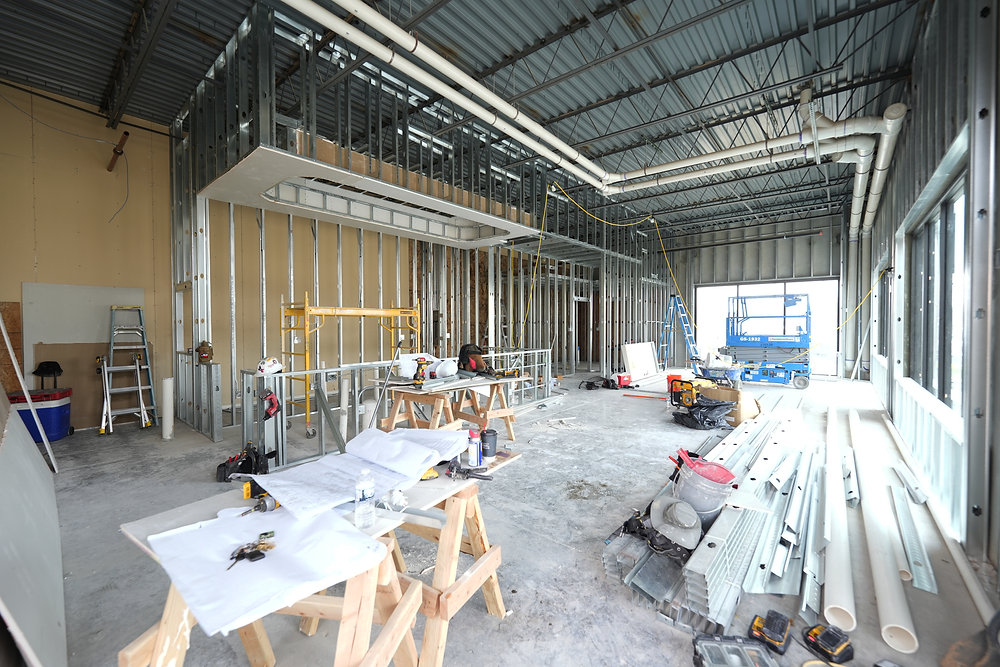
Commercial tenant improvement is any permanent modification made to the interior of a leased commercial space to customize it for a specific tenant's business operations. These improvements include constructing or removing walls, installing new flooring, upgrading electrical and plumbing systems, modifying HVAC ductwork, replacing ceilings and lighting, and building specialized areas like commercial kitchens, exam rooms, server closets, or conference rooms. The landlord typically funds all or part of the work through a tenant improvement allowance (TIA) written into the lease agreement. According to Cushman and Wakefield's 2026 Americas Office Fit Out Cost Guide, office fit-out costs across the Americas averaged $149 per square foot in 2026, up 5.5% year over year. Whether you are a tenant negotiating a new commercial lease or a landlord preparing space for a new occupant, understanding what commercial tenant improvement involves, what it costs, who pays, who manages it, and how it fits into the lease protects both parties from budget overruns, schedule delays, and legal disputes. This guide covers every dimension of commercial tenant improvement from the real estate transaction through the construction process.
What Is Tenant Improvement in Commercial Real Estate?
Tenant improvement in commercial real estate refers to the construction work performed inside a leased space to make it functional for a particular tenant's business. The term covers every non-residential building type: offices, retail stores, restaurants, medical clinics, fitness centers, hotels, industrial facilities, and mixed-use developments. The improvements become permanent parts of the building once installed, which is why the landlord retains ownership of the finished work after the tenant's lease ends.
Commercial tenant improvements are also called "TIs," "build-outs," or "leasehold improvements." Real estate professionals use "tenant improvement." Contractors use "build-out." Accountants use "leasehold improvement" because that is the term in IRS depreciation schedules and ASC 842 lease accounting standards. The construction scope, permitting requirements, and ownership rules are identical regardless of which term the lease uses. A tenant improvement contractor manages the work whether the project documents call it a TI, a build-out, or a leasehold improvement.
What Are Considered Commercial Tenant Improvements?
Items considered commercial tenant improvements are permanent modifications physically attached to the building that cannot be removed when the tenant vacates. Items that the tenant can carry out the door, such as furniture, computers, phone systems, and portable equipment, do not qualify.
Common commercial tenant improvements include:
- Interior partition walls, drywall, and doors
- Flooring (carpet tile, LVT, porcelain tile, polished concrete)
- Electrical wiring, circuits, outlets, and panel upgrades
- Plumbing (restrooms, kitchens, lab sinks, medical exam room sinks)
- HVAC ductwork modifications, thermostats, and supplemental cooling units
- Ceiling grid, tiles, and drywall ceilings
- Light fixtures (recessed, pendant, track, under-cabinet)
- Built-in millwork (reception desks, cabinetry, shelving)
- Fire suppression system modifications (sprinkler head relocation, fire alarm devices)
- ADA-compliant restroom modifications and path-of-travel upgrades
Items that do not qualify include desks, chairs, workstations, computers, data cabling, security cameras, artwork, signage, window treatments, and moving expenses. These are classified as furniture, fixtures, and equipment (FF&E) or personal property. The distinction matters because the tenant improvement allowance from the landlord covers only qualifying permanent improvements. FF&E comes from the tenant's own operating budget.
Who Typically Pays for Commercial Tenant Improvements?
The landlord typically pays for commercial tenant improvements through a tenant improvement allowance (TIA) negotiated as part of the lease agreement. The TIA is expressed as a dollar amount per rentable square foot. A $50 per square foot allowance on a 4,000 square foot space produces a total of $200,000 toward the build-out. Any costs that exceed the TIA are the tenant's responsibility.
TIA amounts vary by property type, market conditions, lease term, and the condition of the space. According to The Cauble Group's 2026 analysis, a reasonable TIA falls between 25% and 150% of one year's base rent. Each additional year of lease term supports an extra $5 to $10 per square foot in allowance because the landlord has more time to recover the investment through rent.
Property TypeTypical TIA Range (Per SF)Key DriversClass A Office$50 to $100+Premium finishes, long lease terms, complex MEPClass B Office$30 to $60Standard finishes, moderate scopeRetail (New Shell)$30 to $60Full build-out from vanilla shellRestaurant$40 to $100+Kitchen systems, grease traps, exhaust, heavy plumbingMedical Office$60 to $120+Specialized plumbing, HVAC, code complianceIndustrial / Warehouse$10 to $30Minimal interior work, small office carve-outs
Sources: Cushman and Wakefield 2026 Fit Out Cost Guide, JLL 2026 Global Office Fit-Out Cost Guide, The Cauble Group
In Florida, commercial leases outline the landlord's obligations to complete work before the tenant takes possession and define the improvements the tenant is permitted to make, according to The Soto Law Office's analysis of Florida commercial lease provisions. The lease should specify the TIA amount, what expenses qualify for reimbursement, the payment process, and any inspection or documentation standards that must be met before funds are released.
How Does the Commercial Tenant Improvement Process Work?
The commercial tenant improvement process works in three phases: pre-construction planning, construction, and closeout. Each phase has defined deliverables that must be completed before the next phase begins.
During pre-construction, the tenant improvement contractor reviews the architectural plans, develops a construction budget, creates the project schedule, pre-qualifies subcontractors, and submits plans to the building department for permits. Getting a contractor-generated budget estimate during pre-construction, before signing the lease, tells the tenant whether the TIA covers the full build-out or leaves a gap that the tenant must fund out of pocket.
During construction, the contractor manages the build-out through a defined sequence:
- Demolition of existing conditions that do not fit the new layout
- Framing for new partition walls, doors, and enclosed rooms
- Mechanical, electrical, and plumbing (MEP) rough-in
- Building department rough-in inspection
- Drywall, taping, and ceiling grid installation
- Finish work: flooring, paint, trim, millwork, light fixtures, plumbing fixtures
- Final inspection and certificate of occupancy (CO)
During closeout, the contractor completes a punch list, obtains the CO, collects final lien waivers from every subcontractor, and delivers the space in move-in condition. The CO authorizes the tenant to legally occupy the space. The Associated Builders and Contractors reported in January 2026 that the construction industry needs 350,000 new workers to meet demand. That labor shortage affects TI timelines because skilled electricians, plumbers, and HVAC technicians are in high demand across all commercial construction sectors.
What Is the Difference Between a Renovation and a Tenant Improvement?
The difference between a renovation and a tenant improvement is who initiates the work and what it serves. A tenant improvement is initiated by a tenant (or negotiated between landlord and tenant) to customize one leased space for that tenant's business. A renovation is initiated by the property owner to update, repair, or upgrade the building itself, independent of any individual tenant.
A renovation might include a new roof, elevator modernization, parking lot repaving, or lobby upgrades. These are building-wide improvements funded by the owner as capital expenditures. A tenant improvement modifies only the interior of one tenant's space. From a commercial general contracting standpoint, the construction process is similar, but the lease, accounting, and ownership structures differ significantly.
How Do Landlords Typically Handle Tenant Improvements?
Landlords typically handle tenant improvements through one of three arrangements: a tenant-controlled build-out, a landlord-controlled build-out, or a turnkey delivery. The arrangement is negotiated as part of the lease.
In a tenant-controlled build-out, the tenant selects their own contractor, manages the construction, and draws against the TIA as work is completed and verified. This gives the tenant the most control over design, materials, and quality. In a landlord-controlled build-out, the landlord manages the project using their own contractors. The tenant provides input on design but the landlord controls bidding, scheduling, and daily construction management. In a turnkey arrangement, the landlord delivers the space fully constructed to an agreed set of plans by a specific date. The tenant receives a move-in-ready space without managing any construction, but typically pays higher base rent because the landlord absorbs the construction risk.
We manage tenant-controlled build-outs across office, restaurant, retail, and hospitality spaces.
Tenants who maintain direct oversight of the construction process get closer to budget and closer to their design intent than those who delegate the process entirely to the landlord. The tenant-controlled model requires hiring a qualified contractor, but the control over materials, schedule, and spending typically produces better outcomes for the tenant.
How Are Tenant Improvements Accounted For?
Tenant improvements are accounted for differently by landlords and tenants. The landlord records the TIA as a lease incentive that reduces recognized rental income over the lease term under ASC 842 accounting standards. The tenant records the TIA as a reduction to the right-of-use (ROU) asset on the balance sheet.
For tax purposes, tenant improvements that qualify as qualified improvement property (QIP) under IRC Section 168(e)(6) can be depreciated over 15 years using the Modified Accelerated Cost Recovery System (MACRS). Under the One Big Beautiful Bill Act (OBBBA), 100% bonus depreciation was restored for QIP placed in service after January 19, 2025, according to IRS Notice 2026-11. This means the full cost of qualifying interior improvements to nonresidential buildings can be deducted in the year the work is completed. Section 179 expensing is also available for qualifying improvements. Consult a tax professional before making depreciation elections.
Frequently Asked Questions
What Is a Typical Tenant Improvement Allowance?
A typical tenant improvement allowance ranges from $10 to $100 or more per square foot depending on the property type, market conditions, lease term, and space condition. Office spaces receive $30 to $100 per square foot. Retail spaces receive $15 to $60 per square foot. Each additional year of lease term supports approximately $5 to $10 per square foot in additional allowance.
Do You Have to Pay Back a Tenant Improvement Allowance?
No, you do not pay back a tenant improvement allowance as a separate repayment. The landlord recovers the cost by amortizing it into the base rent over the lease term. Some leases include a clawback provision requiring repayment of unamortized TIA if the tenant terminates early. Review this clause carefully before signing.
How to Negotiate a Tenant Improvement Allowance?
You negotiate a tenant improvement allowance by getting accurate construction estimates before entering lease negotiations, offering a longer lease term, demonstrating strong financials, and researching comparable TIA packages in your market. According to Cushman and Wakefield's 2026 data, 79% of contractors expect construction costs to continue rising, making current estimates essential for any negotiation.
How Many Years Do You Depreciate Tenant Improvements?
You depreciate tenant improvements over 15 years under MACRS if they qualify as qualified improvement property (QIP). With 100% bonus depreciation restored under the OBBBA for QIP placed in service after January 19, 2025, the full cost can be deducted in year one. The 15-year recovery period applies when bonus depreciation is not elected or not available.
What Is an Example of a Tenant Improvement?
An example of a tenant improvement is converting an open-plan office suite into six private offices, two conference rooms, a reception area, and a break room with plumbing for a sink and dishwasher. The work includes framing, drywall, electrical, HVAC modifications, flooring, lighting, and paint. All of these modifications are permanent and stay with the building when the tenant's lease ends.
What Are Red Flags for Tenants in a Commercial Lease?
Red flags for tenants in a commercial lease include a TIA that does not match the actual cost of the build-out, vague language about what expenses qualify for reimbursement, a restoration clause requiring the tenant to return the space to shell condition at lease expiration (which can cost $10 to $30 per square foot), and the absence of a formal change order process for scope modifications during construction. Every ambiguous clause in the lease becomes a potential financial dispute.
Wrapping It Up
Commercial tenant improvement is the construction work that transforms a generic leased space into a functional environment built for a specific business. The work ranges from cosmetic updates to full structural and mechanical build-outs. Who pays, who owns the improvements, how the costs are accounted for, and what the lease requires are all defined before construction begins. The construction itself follows a disciplined sequence of planning, permitting, building, inspecting, and delivering that applies to every commercial interior project.
The rising cost of commercial construction makes every dollar in a TI budget count. JLL's 2026 Global Office Fit-Out Cost Guide reported that North America is the most expensive region for office fit-outs at an average of $295 per square foot. In that environment, selecting a qualified tenant improvement contractor, getting accurate estimates before signing the lease, and building permit timelines into the project schedule are the three decisions with the greatest impact on whether a commercial tenant improvement project finishes on time, on budget, and to the standard the space demands.
If you are planning a commercial tenant improvement in South Florida and want a team that manages every phase from pre-construction through certificate of occupancy, MT Construction Group is ready to help. Call us at 786-882-3877 or request a free quote to start the conversation.




.avif)


.avif)
.avif)
.avif)