
%201.avif)
.avif)

What Is Construction Project Management
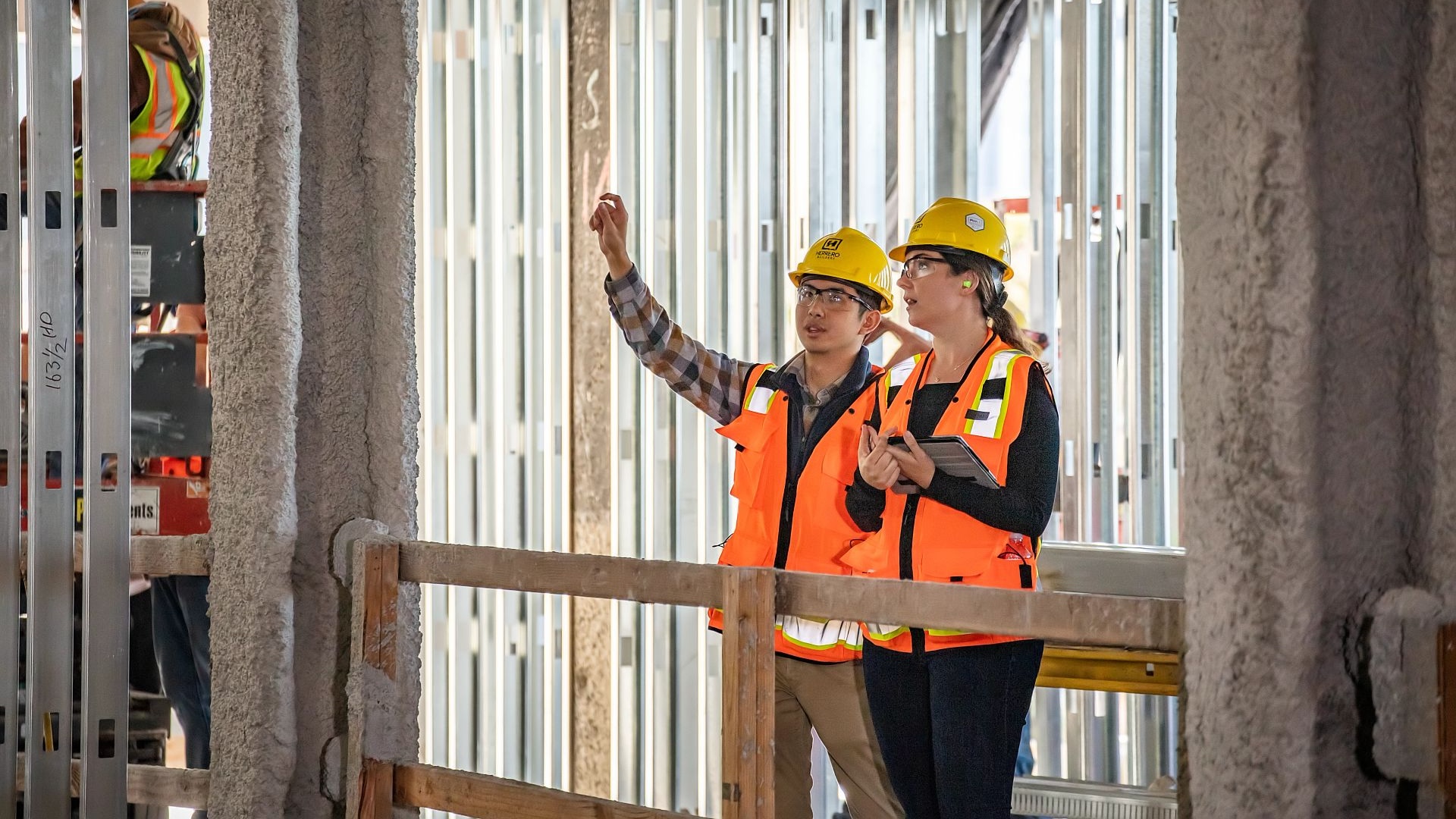
Construction project management is the process of planning, coordinating, and controlling every part of a construction project from start to finish. This process covers scope, cost, schedule, quality, and safety across the full project lifecycle, from the first concept through final handover. Construction project management brings together owners, architects, engineers, contractors, and subcontractors under one coordinated plan so the finished build meets its goals on time and within budget. The rest of this article covers what construction project managers do, how project management differs from construction management, the phases every project moves through, and why the discipline matters for any build.
What Is Construction Project Management and Why Does Every Build Need It
Construction project management is the discipline of overseeing and coordinating all aspects of a construction project across its entire lifecycle. This discipline covers planning, budgeting, scheduling, procurement, execution, quality control, risk management, and closeout. The project manager serves as the central point of accountability connecting every stakeholder, from the property owner to the architect to the general contractor and every subcontractor on site.
According to IBISWorld, the construction project management services industry in the United States generated $372.5 billion in revenue in 2025, growing at a compound annual growth rate (CAGR) of 5.0% over the previous five years. That growth reflects how much the industry depends on professional oversight to deliver results. Construction project management applies to every type of build, from commercial construction to single-family homes.
Without professional project management, construction projects face disorganized timelines, uncontrolled budgets, and unclear accountability. Research from the Project Management Institute (PMI) shows that only 35% of projects worldwide finish successfully, meeting all goals and timelines. That statistic alone explains why construction project management exists as a dedicated profession. The discipline brings structure, documentation, and control to a process that involves hundreds of moving parts, dozens of people, and significant financial investment.
How Is Construction Project Management Different from Construction Management
Construction project management differs from construction management in scope, authority, and timing. Construction project management covers the entire project lifecycle, from initial planning and design through procurement, execution, and closeout. Construction management focuses specifically on the physical building phase, the daily field operations, trades coordination, and on-site execution.
A construction project manager owns the budget, the master schedule, stakeholder relationships, and strategic decision-making across all phases. A construction manager operates primarily on the job site, directing subcontractors, managing material deliveries, enforcing safety protocols, and solving problems in real time. The construction manager reports to the project manager on most projects.
On small builds like a single-family remodel, one person often fills both roles. On larger and more complex projects like multifamily developments or luxury residential builds, separating the two roles prevents information gaps between the office and the field. The project manager keeps the project aligned with the client's vision and financial targets. The construction manager keeps the crews productive and the site safe.
AttributeConstruction Project ManagerConstruction ManagerScopeFull project lifecycle (planning through closeout)Construction phase (field execution)Primary FocusBudget, schedule, stakeholder coordination, strategic decisionsOn-site operations, trades, daily sequencing, safetyWork LocationOffice and job sitePrimarily job siteReports ToOwner or executive sponsorProject managerAuthority LevelApproves change orders, authorizes spending, negotiates with ownerRedirects crews, adjusts daily sequencing, stops unsafe workDecision ScopeStrategic (scope, budget, timeline)Tactical (field operations, crew management)
Sources: Project Management Institute (PMI), Construction Management Association of America (CMAA), Bureau of Labor Statistics (BLS)
What Does a Construction Project Manager Do
A construction project manager oversees every phase of the construction process, from the first client meeting through final handover. The core responsibilities include developing the project plan, setting the budget and schedule, coordinating architects and engineers, managing procurement, overseeing subcontractor performance, tracking progress, controlling costs, and communicating with all stakeholders throughout the build.
Communication is one of the most critical responsibilities. A study from PMI found that poor communication leads to one in three construction project failures. The project manager acts as the central hub for information flow, connecting the owner, design team, general contractor, and subcontractors so everyone works from the same plan. Weekly status reports, budget updates, schedule reviews, and stakeholder briefings all fall under the project manager's coordination.
The project manager also handles permitting and regulatory compliance. Construction projects must satisfy local building codes, zoning requirements, environmental regulations, and safety standards. Missing a permit or failing an inspection delays the entire schedule. A project manager who understands tenant improvements and commercial buildouts knows which permits to pull and when, preventing costly hold-ups.
Risk management is another core duty. The project manager identifies potential problems early, from weather delays and material shortages to labor disputes and design conflicts, and creates contingency plans before those problems disrupt the build.
What Is the Difference Between a Construction Project Manager and a General Contractor
The difference between a construction project manager and a general contractor is the scope of their authority and accountability. A general contractor (GC) performs and manages the physical construction work. The GC hires subcontractors, orders materials, coordinates trades on site, and delivers the built structure according to the plans and specifications.
A construction project manager oversees the GC and the entire project beyond just the construction phase. The PM manages the budget, the master schedule, stakeholder communication, procurement strategy, permitting, and project closeout. On office buildouts and other commercial projects, the PM often begins work months before the GC breaks ground, handling feasibility studies, design coordination, and contractor selection.
The GC answers to the project manager on most builds. The PM sets the strategic direction. The GC executes it in the field. Both roles depend on each other, but they serve different functions within the project structure.
What Are the Phases of Construction Project Management
The phases of construction project management follow a sequential lifecycle that moves from concept through completion. The Construction Management Association of America (CMAA) defines this lifecycle in five to six stages, and most industry frameworks follow a similar structure. Each phase builds on the previous one, and skipping or rushing any phase creates problems downstream.
- Initiation (Pre-Design): The owner identifies the project objective, conducts a feasibility study, establishes the business case, and assembles the project team. A project charter defines the project's goal, scope, and key stakeholders.
- Planning and Design: The project team creates detailed blueprints, develops the master schedule, estimates costs, secures permits, and defines the work breakdown structure (WBS). This phase produces the project plan that guides everything that follows.
- Procurement: The project manager solicits bids, evaluates subcontractors and suppliers, negotiates contracts, and finalizes purchase orders for materials and equipment.
- Execution (Construction): Physical construction begins. Crews mobilize, materials arrive on site, and the general contractor manages daily field operations under the project manager's oversight.
- Monitoring and Control: This phase runs parallel to execution. The project manager tracks progress against the baseline schedule and budget, manages change orders, conducts quality inspections, and implements corrective actions when the project drifts from the plan.
- Closeout (Handover): The team completes punch lists, conducts final inspections, compiles as-built documents, delivers warranties and maintenance manuals, and formally transfers the completed build to the owner.
Every type of project moves through these phases, from a restaurant build for a new dining concept to a high-rise office tower. The complexity and duration of each phase varies by project size, but the sequence remains consistent across the industry.
What Happens During the Planning Phase of a Construction Project
The planning phase of a construction project is where the project manager defines exactly how the build will happen, how much it will cost, and how long it will take. This phase produces the documents and decisions that every other phase depends on. Rushing the planning phase is one of the most common causes of cost overruns and schedule delays later in the project.
During planning, the project manager works with architects and engineers to finalize the design, creates a detailed construction schedule with milestones and task dependencies, develops cost estimates for labor, materials, and equipment, and secures all necessary permits and regulatory approvals. The work breakdown structure (WBS) divides the entire project into manageable tasks that can be tracked individually.
Risk planning also happens during this phase. The project manager identifies potential threats, from supply chain disruptions to permitting delays, and develops mitigation strategies for each. A well-planned project accounts for contingencies before they become emergencies. The timeline for building a custom home, for example, depends heavily on how thorough the planning phase is, because design changes after construction starts cost exponentially more than changes made on paper.
How Does a Construction Project Manager Control Cost and Budget
A construction project manager controls cost and budget through accurate estimation, continuous tracking, disciplined change order management, and strategic contingency planning. Cost management begins in the planning phase with a detailed cost estimate that accounts for every line item: labor, materials, equipment, permits, overhead, and profit margins.
Once construction starts, the project manager monitors actual spending against the approved budget on a weekly or biweekly basis. Variances get flagged immediately. If a subcontractor's bid comes in higher than estimated, or if material prices shift, the PM evaluates the impact and decides whether to absorb the difference from contingency reserves, negotiate an alternative, or submit a change order to the owner.
According to a KPMG study, only 31% of all construction projects came within 10% of the original budget over the past three years. That number shows how difficult cost control is and why it demands constant attention. A clear picture of construction costs at a granular level, from per-square-foot pricing to material-specific estimates, gives the project manager the data needed to catch problems before they compound.
Value engineering is another cost control tool. The project manager works with the design team and GC to find ways to reduce cost without sacrificing quality or performance. Substituting a material that performs identically but costs less, or adjusting the construction sequence to reduce labor hours, are common value engineering decisions that protect the bottom line.
What Happens When a Construction Project Goes Over Budget
When a construction project goes over budget, the consequences affect every stakeholder involved. The owner faces higher costs that reduce return on investment. The contractor's profit margin shrinks or disappears. Subcontractors may dispute payment terms. The schedule often stretches because budget constraints force slower progress or material substitutions that require re-engineering.
Research from McKinsey and Company found that large construction projects are typically up to 80% over budget and take 20% longer to complete than originally planned. A separate literature review published in the International Journal of Innovation, Management and Technology found that 9 out of 10 construction projects experience cost overruns, with an average overrun of 28%.
The root causes include inaccurate initial estimates, scope creep (where project requirements expand without corresponding budget adjustments), design errors that require rework, material price volatility, and poor communication between stakeholders. The Construction Industry Institute reports that rework alone costs between 2% and 20% of a project's total contract value, with most studies clustering around 4% to 10%.
Professional construction project management reduces overrun risk through detailed upfront planning, continuous budget monitoring, and proactive change order management. Projects involving complex scopes like hotel renovations are especially vulnerable to overruns because of the coordination required between active operations and construction activities.
How Does Construction Project Management Keep a Project on Schedule
Construction project management keeps a project on schedule through detailed scheduling, critical path analysis, milestone tracking, lookahead planning, and proactive delay mitigation. The master schedule establishes the baseline timeline for the entire project. The project manager builds this schedule during the planning phase using task dependencies, resource allocation, and realistic duration estimates for each activity.
The critical path method (CPM) identifies the longest sequence of dependent tasks that determines the project's minimum completion time. Any delay on a critical path task delays the entire project. The project manager monitors critical path activities daily and addresses threats to those tasks before they cascade into larger disruptions.
Lookahead schedules, typically covering two to four weeks ahead, help the project manager coordinate subcontractors, material deliveries, and inspections in the near term. These short-range schedules catch conflicts and bottlenecks before they reach the job site.
Communication failures are the single biggest schedule threat. PMI data shows that one in five projects fails as a direct result of poor communication. The project manager maintains clear communication channels between every party on the project, from the owner to the architect to every trade on site. Weekly coordination meetings, daily field reports, and real-time status updates prevent information gaps that cause delays. Even projects with well-defined scopes like a tenant improvement allowance buildout can fall behind schedule without disciplined tracking and coordination.
What Are Common Causes of Construction Project Delays
Common causes of construction project delays include permitting hold-ups, labor shortages, material supply chain disruptions, weather events, design changes after construction starts, scope creep, subcontractor coordination failures, and inspection failures.
According to research by Brent Flyvbjerg and Dan Gardner, 91.5% of construction projects go over budget, over schedule, or both. Schedule delays and cost overruns feed each other in a cycle that compounds over time. A delayed inspection pushes back the next trade's start date, which shifts every downstream task on the critical path. A material delivery that arrives two weeks late forces crews to either idle or jump to a different task, disrupting the planned sequence.
Labor shortages compound these delays further. The construction industry has faced a persistent skilled labor gap, making it harder to staff projects at the pace the schedule demands. When crews are spread thin across multiple projects, productivity drops and timelines stretch. The project manager's job is to anticipate these risks during planning and build schedule buffer for weather, permitting, and supply chain variability.
How Does Construction Project Management Reduce Risk
Construction project management reduces risk through systematic identification, assessment, and mitigation of threats that could affect cost, schedule, quality, or safety. Risk management is not a single event; it runs continuously from project initiation through closeout.
During the planning phase, the project manager conducts a risk assessment that catalogs potential threats: permitting delays, weather disruptions, material price volatility, labor shortages, design conflicts, regulatory changes, and site conditions that differ from initial surveys. Each risk gets evaluated by probability and potential impact. The highest-priority risks receive specific mitigation plans and contingency budgets.
During execution, the project manager monitors active risks and watches for new ones. Change orders, unexpected site conditions, and subcontractor performance issues all introduce risk that requires real-time decision-making. Safety risk is paramount on every construction site. The project manager enforces compliance with Occupational Safety and Health Administration (OSHA) standards, conducts regular safety audits, and maintains incident documentation.
Complex renovations like condo renovations in occupied buildings carry additional risks related to resident access, noise restrictions, and structural work adjacent to existing systems. Professional project management accounts for these constraints during planning rather than reacting to them during construction.
Data from PMI shows that 12% of all project investment is lost due to poor performance, amounting to trillions of dollars annually across the global construction industry. Risk management is the discipline that prevents those losses.
What Skills Does a Construction Project Manager Need
A construction project manager needs a combination of technical knowledge, management ability, and interpersonal skills to deliver projects successfully. The role demands both hard skills and soft skills in equal measure, and the ability to apply them under pressure on a live job site.
Technical skills form the foundation of the role:
- Scheduling and critical path analysis for sequencing construction activities across months or years of work
- Cost estimation and budget management covering labor, materials, equipment, and overhead
- Blueprint and specification reading to verify that construction matches the approved design
- Building code and regulatory knowledge for permitting and inspection compliance
- Contract administration and procurement for managing subcontractor and supplier agreements
- Quality control and inspection protocols to verify workmanship standards throughout the build
- Building information modeling (BIM) literacy for coordinating design, structural, and mechanical systems digitally
Soft skills determine whether those technical abilities translate into results on a real project. Communication across diverse stakeholder groups is the single most important soft skill. Leadership, negotiation, problem-solving under time pressure, conflict resolution between parties with competing interests, and time management across multiple concurrent responsibilities round out the skill set.
According to industry survey data, only 3% of construction project managers work fully remotely. The role requires regular presence on the job site to observe progress, verify quality, and resolve issues in person. Field presence separates construction PM from other project management disciplines and is one of the reasons the profession demands hands-on experience.
Research from McKinsey and Company estimates that boosting productivity in the construction industry could save $1.7 trillion annually worldwide. The project manager's skill set is what drives that productivity, from tighter scheduling to better communication to more accurate cost control.
What Tools Do Construction Project Managers Use
Construction project managers use specialized software, scheduling tools, communication platforms, and document management systems to coordinate the dozens of moving parts in every build. The right tools increase visibility, reduce errors, and keep all stakeholders working from the same information.
Project management software is the central platform. Tools like Procore, Autodesk Construction Cloud, and Oracle Construction and Engineering help project managers plan schedules, track budgets, manage documents, process RFIs (requests for information), handle change orders, and generate reports. According to Mordor Intelligence, the construction management software market reached $10.62 billion in 2025 and is projected to grow to $17.81 billion by 2031, reflecting how essential these tools have become for the industry.
Gantt charts visualize the project schedule, showing task sequences, dependencies, milestones, and critical path activities on a horizontal timeline. The Gantt chart gives the project manager and all stakeholders a clear picture of where the project stands relative to the plan at any given moment.
Building information modeling (BIM) creates three-dimensional digital representations of the building that integrate design, structural, mechanical, and electrical systems in one coordinated model. BIM helps the project manager identify conflicts between systems before construction begins, reducing costly rework on site.
The PMI reports that more than 70% of project professionals say their organizations are using or exploring artificial intelligence (AI) in project management. AI-powered tools predict schedule risks, automate compliance documentation, and flag budget variances, helping project managers on commercial projects stay ahead of problems instead of reacting to them after the damage is done.
What Types of Construction Projects Need a Project Manager
Every type of construction project benefits from a project manager, but the role becomes essential as project complexity, budget size, and stakeholder count increase. The four main categories of construction projects are residential, commercial, industrial, and infrastructure.
Residential projects include single-family homes, multifamily apartment buildings, and high-end custom home building. Smaller residential projects may combine the PM and GC roles into one person, but luxury builds and multi-unit developments require dedicated project management to handle the design coordination, permitting, and budget complexity that come with larger scopes.
Commercial projects include office buildings, retail spaces, restaurants, hotels, and mixed-use developments. These projects involve multiple tenants, complex mechanical and electrical systems, ADA compliance, and fire code requirements that demand professional oversight. Here in South Florida, the pace of commercial development makes disciplined project management a requirement for every major build.
Industrial projects include manufacturing facilities, warehouses, distribution centers, and power plants. Infrastructure projects include roads, bridges, tunnels, and public utilities. Both categories involve specialized engineering, environmental regulations, and government oversight that add layers of complexity to the project manager's responsibilities. The common thread across all these project types is coordination. The more people, systems, and regulations involved, the more a dedicated project manager is needed to keep everything aligned.
How Do You Become a Construction Project Manager
Becoming a construction project manager typically requires a combination of formal education, field experience, and professional certification. There is no single path into the role, but the most common routes follow one of two tracks.
The academic track starts with a bachelor's degree in construction management, civil engineering, architecture, or a related field. Many universities now offer dedicated construction management programs that combine technical coursework with project management methodology. After completing the degree, graduates typically enter the field as assistant project managers or project engineers and work their way up over three to five years of hands-on experience.
The experience track starts in the field. A skilled tradesperson who demonstrates leadership, organizational ability, and a strong work ethic can advance from trade worker to foreman, then to superintendent, and eventually to project manager. Many successful PMs built their careers by learning construction from the ground up before taking on full project oversight.
Professional certifications strengthen a project manager's credentials. The PMP (Project Management Professional) from PMI and the CCM (Certified Construction Manager) from CMAA are the two most recognized industry certifications. OSHA 30-Hour Outreach Training is also widely expected for safety compliance on commercial job sites.
According to the Bureau of Labor Statistics, the median annual salary for construction project managers in the United States is approximately $106,980. Senior project managers in major metropolitan markets earn significantly more. PMI's Global Project Management Talent Gap report projects that global demand for project professionals will grow by 64% from 2025 to 2035, creating a worldwide need for 30 million additional professionals. Construction-related spending contributes 13% of global gross domestic product, according to G2 research, making the stakes enormous for the global economy.
Why Is Construction Project Management Important
Construction project management is important because it is the single discipline that determines whether a project finishes on time, within budget, and at the quality the owner expects. Without professional project management, the construction industry's already high failure rate would be even worse.
PMI data shows that only 35% of projects worldwide finish successfully. High-performing organizations that invest in professional project management complete 81% to 89% of their projects successfully, compared to just 34% to 45% for underperformers. That gap represents millions of dollars in saved costs, recovered timelines, and delivered value on every project.
The financial impact extends across the entire industry. PMI reports that 12% of all project investment is lost due to poor project performance. McKinsey estimates that improving productivity in construction through better management could save $1.7 trillion annually worldwide. For property owners, developers, and businesses, construction project management provides peace of mind. A dedicated project manager means someone is watching the budget daily, tracking the schedule weekly, managing every subcontractor, and keeping the owner informed at every milestone.
Whether the build is a new office tower in Brickell or a luxury home in Coral Gables, the principles of construction project management remain the same: plan thoroughly, execute with discipline, communicate constantly, and control every variable that affects the outcome. Commercial builds across every market depend on this discipline to protect investment and deliver results that hold up over time.
Frequently Asked Questions
What Is the Construction Project Lifecycle
The construction project lifecycle is the complete sequence of phases a project moves through from initial concept to final handover. The lifecycle typically includes initiation, planning and design, procurement, construction execution, monitoring and control, and closeout. Each phase produces specific deliverables that feed into the next phase, creating a structured path from idea to finished build.
What Certifications Does a Construction Project Manager Need
A construction project manager does not legally require a specific certification in most states, but professional credentials significantly improve credibility and earning potential. The two most recognized certifications are the PMP (Project Management Professional) from PMI and the CCM (Certified Construction Manager) from CMAA. OSHA 30-Hour Outreach Training is also widely expected for safety compliance on commercial job sites.
Can a General Contractor Also Be a Project Manager
A general contractor can also serve as the project manager on smaller builds where the scope does not require a separate oversight role. On larger commercial or luxury residential projects, splitting the two roles is standard practice because the responsibilities differ significantly. The GC manages field execution. The PM manages the entire project from planning through closeout, including the GC's performance.
How Long Does It Take to Become a Construction Project Manager
Becoming a construction project manager typically takes five to ten years, depending on the path. A degree in construction management or civil engineering takes four years, followed by three to five years of field experience in assistant or junior PM roles. Professionals who start in the trades may take longer to reach the PM level but bring invaluable hands-on construction knowledge that degree-track managers sometimes lack.
What Is the Difference Between a Project Manager and a Superintendent
The difference between a project manager and a superintendent is the level of responsibility and focus. A superintendent manages day-to-day operations on a single job site, coordinating crews, enforcing safety, and maintaining quality standards. A project manager oversees the superintendent and manages the broader project, including budget, schedule, contracts, and stakeholder communication across all phases of the build.
Do Small Construction Projects Need a Project Manager
Small construction projects benefit from project management principles even without a dedicated PM on staff. The fundamentals of scope definition, budget tracking, schedule management, and clear communication apply to every build regardless of size. On smaller jobs, the contractor or owner may handle PM duties directly. As project complexity and budget grow, a dedicated project manager prevents the disorganization and cost overruns that derail builds of every scale.
The Takeaway
Construction project management is the backbone of every successful build. The discipline brings structure, accountability, and control to a process that involves hundreds of decisions, dozens of stakeholders, and significant financial investment. From the first feasibility study through the final walkthrough, professional project management keeps a project aligned with its goals.
We see the impact of disciplined project management on every project we deliver at MT Construction Group. With over 560 projects completed across South Florida, our team understands that clear planning, structured execution, and constant communication are what turn a concept into a finished space that holds its value over time.
If you are planning a commercial build, a luxury home, or a renovation and want a team that manages every detail from start to finish, reach out at 786-882-3877 or request a free quote. We would be glad to talk through your project.




.avif)


.avif)
.avif)
.avif)