
%201.avif)
.avif)

What to Know Before Hiring a Custom Home Builder
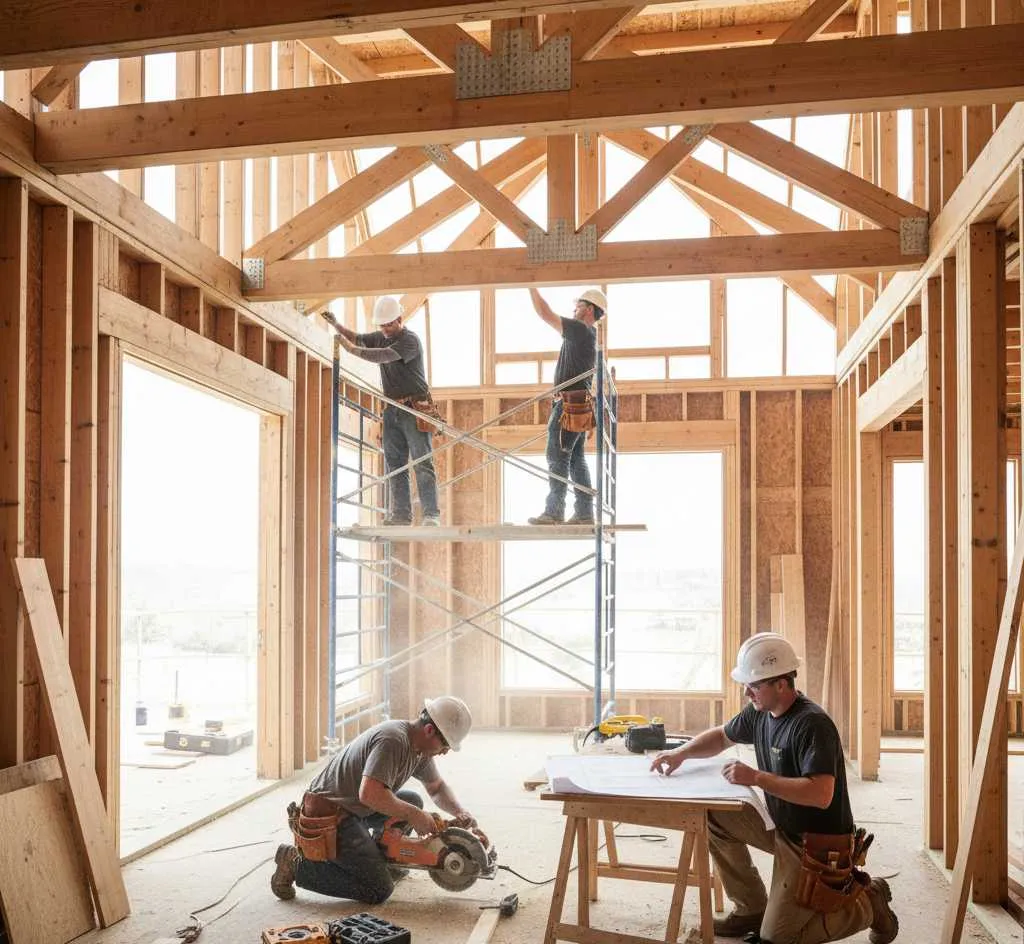
Before hiring a custom home builder, verify their active state license, general liability insurance, and workers' compensation insurance. Understand their pricing structure, whether fixed-price or cost-plus, and how they manage change orders and their associated costs. Request a comprehensive contract detailing payment schedules, exact material specifications, and completion milestones. Speak directly with past clients about communication, budget adherence, and post-completion support. Review their portfolio to confirm their design style aligns with your vision. Never automatically choose the lowest bidder without checking credentials first, because according to research reported by Home Depot, 29% of construction projects exceed the 10% budget overrun mark, and the majority of those overruns trace back to poor planning and unclear agreements made before construction begins.
This guide covers every decision you need to make before signing with a custom home builder. It moves through the vetting process in the same sequence a homeowner should follow: understanding what a custom builder actually does, spotting red flags, asking the right questions about licensing and insurance, evaluating contracts and pricing models, accounting for hidden costs, setting realistic timeline expectations, and avoiding the most common mistakes that derail custom home projects.
What to Know Before Hiring a Custom Home Builder
The most important thing to know before hiring a custom home builder is that the vetting you do before construction starts matters more than anything that happens after. A builder with verified credentials, a clear contract, and a documented communication process will deliver a home that matches your vision. A builder you chose based on price alone, without confirming their license, insurance, or past client references, creates risk at every stage of the project.
Custom home building grew 4% in the second quarter of 2025, reaching 54,000 total custom building starts, according to an analysis of census data by NAHB economists. The current market share of custom-built homes sits at approximately 19% of total single-family starts. That growth means more homeowners are choosing to build rather than buy, and more builders are entering the market to meet demand. Not all of them operate at the same standard. The difference between a qualified custom home builder and an underqualified one shows up in every phase of construction, from how permits are managed to how the final walkthrough is conducted.
Custom home building requires a level of coordination that production home building does not. Every material specification, every subcontractor assignment, and every inspection sequence is determined by the specific design of your home, not by a repeatable template. That level of complexity demands a builder who manages projects with documented processes, not verbal promises. The sections that follow walk through each layer of the vetting process, starting with the most basic distinction: what a custom home builder actually is.
What Is the Difference Between a Custom Home Builder and a Production Builder?
A custom home builder designs and constructs a home from the ground up based on your specific floor plan, material selections, and site conditions. A production builder constructs homes from a limited set of pre-designed floor plans with standardized options and finishes. The distinction matters because the two models operate with fundamentally different levels of flexibility, accountability, and project management.
Production builders work from repeatable systems. They purchase materials in bulk, assign the same subcontractor crews across multiple homes, and follow a fixed construction sequence that rarely changes. Custom home builders work from a single set of architectural plans created for one homeowner, one lot, and one set of specifications. Every decision, from foundation type to cabinet hardware, is made specifically for that project.
The timeline reflects this difference directly. According to U.S. Census Bureau Survey of Construction data, single-family homes built on the owner's land averaged 12.7 months from authorization to completion. Production homes built from standardized plans typically finish in 4 to 7 months. The longer custom timeline results from individualized material procurement, specialized trade scheduling, and client-approved design decisions that production builds handle through standardization.
The accountability structure differs as well. A production builder's warranty covers a model they have built dozens or hundreds of times. A custom builder's warranty covers a one-of-a-kind structure, and the builder's willingness to stand behind that structure over time reflects the quality they put into it. When you find a custom home builder who treats your project as a long-term relationship rather than a transaction, that difference shows up in every detail of the finished home. Once you understand what a custom builder does, the next step is knowing how to identify the ones you should avoid.
What Are Red Flags When Hiring a Custom Home Builder?
Red flags when hiring a custom home builder include refusing to show proof of a valid license, not carrying general liability or workers' compensation insurance, requesting full payment upfront, avoiding a written contract, pressuring you to sign immediately, and being unable to provide references from past clients. Any one of these signals a builder who either lacks the credentials to do the work legally or lacks the financial stability to complete it.
A builder who asks for cash payment or wants to skip the contract is removing every protection you have as a homeowner. Without a written agreement, there is no enforceable scope of work, no payment schedule tied to milestones, and no documented process for handling changes. According to NAHB and NARI joint guidance published in 2025, homeowners should pay no more than one-third upfront and tie all future payments to completed milestones, not calendar dates.
Vague bids present another warning sign. A qualified custom home builder provides a detailed estimate that breaks down costs by category: site preparation, foundation, framing, mechanical systems, finishes, permits, and contingency. A bid that shows only a single lump sum without line-item detail makes it impossible to compare proposals or hold the builder accountable for material substitutions. Nearly 25% of builders failed to generate a net profit in 2025, according to Buildertrend industry data. Builders operating at thin or negative margins are more likely to cut corners on materials or disappear mid-project when cash flow runs out.
A builder who has changed company names multiple times, has no verifiable online presence, or cannot provide at least three references from completed projects within the last two years should be removed from your list immediately. Knowing the red flags prepares you to ask the right questions, and those questions should cover credentials, insurance, and process in detail.
What Should You Not Say to a Builder?
You should not say to a builder that you have unlimited budget, that you are in a rush to start immediately, or that you will agree to anything just to get the project moving. These statements weaken your negotiating position and signal to the builder that you are unlikely to hold them accountable on cost, timeline, or scope.
Telling a builder your maximum budget before receiving a detailed estimate gives them a target to hit rather than an incentive to deliver value. Expressing urgency before reviewing credentials gives an unqualified builder leverage to pressure you into signing before due diligence is complete. The strongest position you can hold as a homeowner is one of informed patience: you have done your research, you know what the project should cost, and you will wait for the right builder rather than settle for the first one available. That informed position starts with the specific questions you ask during the vetting process.
What Questions Should You Ask a Home Builder Before Hiring Them?
The questions you should ask a home builder before hiring them fall into five categories: credentials, experience, process, contract terms, and communication. Each category exposes a different dimension of the builder's qualifications, and skipping any one of them leaves a gap in your vetting.
Start with credentials. Ask for their state contractor license number and verify it independently through the licensing authority. Ask for certificates of insurance showing current general liability and workers' compensation coverage. Ask whether they pull permits under their own license or expect the homeowner to handle permitting. A builder who avoids permitting is a builder who avoids accountability.
Move to experience next. How many custom homes have they completed in the last five years? Do they have experience with homes similar to yours in size, complexity, and finish level? Can they provide references from at least three clients whose projects are already complete? A builder willing to connect you directly with past clients has confidence in their track record. A builder who resists reference requests does not.
Ask about their construction project management process. Who will be your primary point of contact? How often will you receive progress updates? How are subcontractors selected and supervised? What happens when a phase fails inspection? These process questions reveal whether the builder operates on a structured system or improvises from project to project. Two of these credential categories deserve deeper treatment: insurance requirements and license verification.
What Insurance Should a Custom Home Builder Carry?
A custom home builder should carry general liability insurance, workers' compensation insurance, and builder's risk insurance for the duration of your project. Each policy covers a different category of risk, and the absence of any one of them shifts that risk directly onto you as the homeowner.
General liability insurance covers third-party bodily injury and property damage caused by the builder's work. In Florida, licensed general contractors must carry a minimum of $300,000 in bodily injury liability and $50,000 in property damage liability, according to Florida DBPR and Construction Industry Licensing Board requirements under Florida Administrative Code Rule 61G4-15.003. Workers' compensation insurance covers medical care and disability benefits for any employee injured on the job site. Florida law mandates that contractors with one or more employees carry workers' compensation coverage regardless of how many employees they have.
Builder's risk insurance covers the structure itself during construction, protecting against damage from fire, storms, theft, and vandalism before the home is complete. In South Florida, where hurricane season runs from June through November, builder's risk coverage with wind protection is especially important. Request current certificates of insurance directly from the builder and verify them with the issuing insurance company rather than accepting photocopies at face value. Insurance verification confirms the builder's legitimacy; the next step is verifying the license itself.
How Do You Verify a Contractor License in Florida?
You verify a contractor license in Florida through the Florida Department of Business and Professional Regulation (DBPR) online license verification portal. Enter the contractor's name or license number, and the system returns their license status, license type, issue date, expiration date, and any disciplinary actions on record. The process takes less than five minutes and costs nothing.
Florida requires four years of construction-related work experience, or an equivalent combination of accredited education and experience, to qualify for a general contractor license. Applicants must also pass the Florida state construction examination and provide financial documentation, background clearance, and proof of insurance. A contractor who holds a certified license issued through DBPR is authorized to work anywhere in the state. A contractor who holds a registered license is limited to specific local jurisdictions. In the Miami-Dade area, confirming that your builder holds a certified license provides the broadest protection and accountability. With credentials and insurance verified, the next layer of the vetting process is the contract itself.
What Are the Key Things to Consider Before Building a Custom Home?
The key things to consider before building a custom home are land ownership and site conditions, architectural plan readiness, realistic budget with contingency, builder selection based on verified credentials, and a timeline that accounts for permitting, procurement, and construction phases. Each of these elements must be resolved before construction begins, because decisions made after ground-breaking cost significantly more to change than decisions made during planning.
Land comes first. If you own the lot, a qualified builder will evaluate soil conditions, drainage, utility access, and zoning restrictions before committing to a design. Site preparation costs, including grading, fill, tree removal, and utility connections, vary widely based on lot conditions and are frequently underestimated by first-time custom home builders.
Architectural plans must reach a level of detail that supports accurate bidding. A conceptual floor plan is not enough. Builders need structural engineering, mechanical layouts, and material specifications to provide a reliable estimate. The NAHB 2024 Construction Cost Survey reports the average cost to construct a single-family home reached $428,215 for construction alone, up 9.2% in two years. With costs at this level, luxury residential projects require complete drawings before any contract is signed. The question of who creates those drawings leads to one of the most important structural decisions in the entire process.
Should You Hire a Design-Build Firm or a Separate Architect?
Hiring a design-build firm gives you a single point of accountability for both the architectural design and the construction. Hiring a separate architect gives you independent design oversight but requires coordination between two separate entities throughout the project. Both models work well when managed properly, and the right choice depends on how much coordination you want to manage yourself.
A design-build approach streamlines communication because the same team that draws the plans also builds the structure. Design decisions account for construction feasibility, material availability, and budget constraints from the start, reducing the likelihood of costly redesigns after construction begins. A separate architect provides an independent advocate for your design vision, which can be valuable on complex or architecturally ambitious projects. We work closely with architects, engineers, and designers at every stage, whether clients bring their own team or rely on our in-house architect to develop plans from concept through permitting. Regardless of which design path you choose, the contract that governs the construction is where your financial protection lives.
What Should a Custom Home Building Contract Include?
A custom home building contract should include the complete scope of work with material specifications, a payment schedule tied to construction milestones, a detailed change order process, warranty terms, a project timeline with start and completion dates, dispute resolution procedures, and lien waiver requirements. Every term that matters to your project must be written into the contract before any work begins.
The scope of work section defines exactly what the builder will deliver: square footage, structural systems, mechanical systems covering HVAC, plumbing, and electrical, interior and exterior finishes, fixtures, and appliances. Material specifications should name the product, brand, model, and quality grade wherever possible. A contract that says "granite countertops" without specifying the slab grade, edge profile, and source leaves room for substitution that you may not discover until installation.
The payment schedule should tie every draw to a completed and inspected milestone, not to calendar dates. A typical custom home payment schedule includes an initial deposit of no more than 10-15%, followed by draws at foundation completion, framing completion, mechanical rough-in, drywall, and final completion. Each draw should require the builder to provide lien waivers from all subcontractors who were paid from the previous draw. Lien waivers protect you from mechanics' liens, which give unpaid subcontractors the legal right to place claims against your property even if you have already paid the builder.
Warranty terms should distinguish between workmanship warranty, typically 1 year, systems warranty covering mechanical, electrical, and plumbing at typically 2 years, and structural warranty at typically 10 years. These durations align with industry standards established by NAHB and adopted by most reputable luxury home builders across the country. Within the contract, the pricing structure and the change order process represent two areas that deserve close attention because they determine how cost is managed throughout the entire build.
What Is a Fixed-Price vs Cost-Plus Contract?
A fixed-price contract sets a single total price for the entire scope of work before construction begins. A cost-plus contract charges the actual cost of labor and materials plus a percentage fee or flat fee for the builder's overhead and profit. Each model allocates financial risk differently between the homeowner and the builder, and understanding that allocation is critical before you sign.
FactorFixed-Price ContractCost-Plus ContractBudget PredictabilityHigh; total cost is locked before construction startsLower; final cost depends on actual expenses during the buildRisk AllocationBuilder absorbs cost overruns within the fixed scopeHomeowner absorbs cost increases as they occurTransparencyLess visibility into individual cost categoriesFull visibility into every invoice and material receiptFlexibility for ChangesChanges require formal change orders with price adjustmentsChanges are easier to incorporate but harder to capBest ForHomeowners who want cost certainty and a firm budget ceilingHomeowners who want full cost transparency and expect design changesBuilder IncentiveBuilder is incentivized to control costs within the fixed priceBuilder earns a fee regardless of cost, reducing cost-control incentive
Neither contract type is inherently better. A fixed-price contract protects you from cost overruns but requires complete architectural plans and material specifications before the price can be set. A cost-plus contract gives you more flexibility to make design changes during construction but requires you to monitor costs closely throughout the project. The right choice depends on how finalized your plans are before construction and how much budget variability you can tolerate. Regardless of which pricing model you choose, the contract must include a clear process for handling changes that arise after construction starts.
What Is a Change Order in Home Building?
A change order in home building is a formal written document that modifies the original scope of work, cost, or timeline of the construction contract after the project has started. Change orders require both the builder and the homeowner to agree in writing before any modified work proceeds.
Change orders are a normal part of custom home building. A homeowner may decide to upgrade a countertop material, add a window, relocate a wall, or change a fixture specification during construction. Each of these decisions affects cost, schedule, or both. A properly managed change order documents the requested change, calculates the cost impact, estimates the timeline impact, and requires the homeowner's written approval before execution.
A builder who proceeds with changes on verbal approval alone removes the homeowner's ability to make informed decisions about cost and timeline trade-offs. General Contractors Association data from 2023 found that 24% of contractors reported "client indecision" as a top delay factor, and most of those delays compound when changes are made without documented approval. Every change order should be numbered, dated, signed by both parties, and attached to the original contract as an amendment. Beyond the contract itself, the costs that fall outside the contract scope are where most homeowners get caught off guard.
What Are the Hidden Costs to Build a Custom Home?
The hidden costs to build a custom home include permit and impact fees, site preparation and soil testing, utility connection charges, temporary power and water during construction, design revision fees, material lead-time premiums, landscaping, driveway and hardscape installation, and temporary housing expenses during the build. These costs fall outside the construction contract in many cases and catch homeowners off guard when they appear.
Permit fees alone vary dramatically by jurisdiction. In fast-growing metro areas, permit review windows averaged 8 to 14 weeks in 2026 for custom residential construction, according to industry reporting. Longer permit timelines extend your overall project schedule, which increases carrying costs on construction loans and temporary housing. Impact fees charged by municipalities for schools, roads, parks, and utilities can add thousands of dollars that do not appear in a builder's construction estimate.
Site preparation costs depend entirely on lot conditions. A flat, cleared lot with existing utility access requires minimal preparation. A lot with mature trees, rock formations, poor drainage, or no utility infrastructure requires clearing, grading, fill, retaining walls, and utility trenching that can represent 5-10% of total project cost. Soil testing determines foundation requirements; expansive clay or high water tables may require engineered foundations that cost significantly more than standard slab-on-grade construction.
Material lead times create hidden costs when selections are made late. In 2026, custom windows averaged 12 to 20 weeks lead time, and European appliances ran 16 to 24 weeks, according to builder survey data across major U.S. markets. A home addition or ground-up build that does not account for these lead times risks idle crews waiting for materials, adding labor cost without construction progress. Among all cost categories, one stands above the rest in total dollar impact.
What Is the Most Expensive Part When Building a House?
The most expensive part when building a house is typically the foundation and structural framing, which together account for roughly 25-35% of total construction cost depending on the home's size, structural complexity, and site conditions. Foundation costs increase significantly for homes built on sloped lots, in flood zones, or on soil that requires deep pilings or engineered reinforcement.
After the structural shell, mechanical systems covering HVAC, plumbing, and electrical represent the next largest cost category, followed by interior finishes including flooring, cabinetry, countertops, and fixtures. In luxury custom homes, finishes often exceed the cost of mechanical systems because material selections such as imported stone, custom millwork, and specialty lighting carry premium pricing and installation requirements. The NAHB reports that building material prices rose 3.5% year-over-year through late 2025, with tariff actions adding an estimated $10,900 per home according to builder surveys. These increases compound across every material category in a custom build and directly affect the project timeline.
How Long Does It Take to Build a Custom Home?
A custom home takes 10 to 18 months from design agreement to move-in, with luxury or structurally complex projects running 24 months or more. The U.S. Census Bureau's 2024 Survey of Construction reports that the average single-family home requires 9.1 months from construction start to completion, plus an additional 1.4 months for permit authorization, putting the national average at roughly 10.5 months from permit to move-in. Custom homes built on the owner's land averaged 12.7 months from authorization to completion.
The South recorded the fastest regional build timelines at 8.1 months for standard single-family construction, while the Northeast recorded the longest at 13.5 months, according to the same Census data. Custom homes run longer than these averages because each phase requires individualized decisions that production builds handle through standardization.
Timeline variables include permit review duration, architectural plan complexity, material lead times, weather delays, inspection scheduling, and client decision speed on selections. The construction industry needs approximately 740,000 new workers every year to meet current demand, according to Buildertrend data, and labor shortages are adding nearly two months to construction timelines on average. Workforce constraints affect custom home schedules directly because specialized trades such as custom millwork installers, stone fabricators, and specialty electricians operate on tighter availability than general construction labor.
A realistic luxury home builder will provide a detailed project schedule during pre-construction that identifies every milestone, every inspection hold point, and every material procurement deadline. Builders who promise timelines that sound too fast for the scope of work are either underestimating the project or planning to cut corners to meet an artificial deadline. Timeline overruns are just one consequence of poor planning, and they connect directly to the broader set of mistakes homeowners make during the builder selection process.
What Are Common Custom Home Building Mistakes?
Common custom home building mistakes include choosing a builder based on the lowest bid alone, skipping reference checks and portfolio reviews, proceeding without a comprehensive written contract, underestimating the total project budget, and failing to establish clear communication expectations before construction starts. Each of these mistakes creates problems that are expensive to fix once construction is underway.
Choosing the lowest bid without evaluating builder credentials is the most financially damaging mistake a homeowner can make. A builder who underbids to win a contract often lacks the trade relationships, material purchasing power, or crew depth to deliver the project on budget and on schedule. Builders who underbid frequently juggle too many jobs simultaneously, stretching a six-month timeline to ten or twelve months and inflating labor costs through inefficiency. Labor shortages compound this problem; the construction industry loses more than $10.8 billion annually in productivity due to workforce constraints, according to Buildertrend industry data.
Skipping reference checks removes your most reliable source of information about the builder's actual performance. A polished website and a convincing sales presentation reveal nothing about how the builder handles complications, whether they honor budget commitments, and whether the finished home truly reflects the original design. Speaking directly with three or more past clients, ideally by visiting completed homes in person, gives you insight that no marketing material can replicate.
Home remodeling and new construction projects both suffer the same consequence when communication breaks down: small issues escalate into major problems because decisions that require homeowner input get made without consultation, or they do not get made at all, halting work crews and adding idle labor cost to the project. Establishing communication frequency, preferred method, and a single point of contact before the first day of construction prevents the most common source of homeowner dissatisfaction. Avoiding these mistakes becomes much easier when you follow a structured checklist from the very beginning of the process.
What Is the Best Home Building Checklist?
The best home building checklist follows a sequential process from pre-planning through final move-in, with each step completed and verified before the next one begins. This checklist reflects the process we follow on every project and aligns with industry best practices established by NAHB and the National Institute of Building Sciences.
- Define your budget, including a 15-20% contingency for unexpected costs and scope changes.
- Secure land or confirm your lot's zoning, soil conditions, utility access, and setback requirements.
- Research and interview at least three custom home builders; verify license, insurance, and references for each one.
- Select your builder and finalize architectural plans with complete structural, mechanical, and finish specifications.
- Review and sign a detailed construction contract covering scope, payment schedule, change order process, warranty terms, and dispute resolution.
- Secure construction financing with a lender experienced in custom home loans, including a draw schedule that matches the builder's milestone schedule.
- Obtain all required building permits; factor permit review timelines into your project schedule from the start.
- Establish a communication plan with your builder: frequency, method, single point of contact, and decision deadlines for material selections.
- Monitor construction progress through scheduled site visits and documented milestone inspections at each phase.
- Conduct a thorough final walkthrough with your builder, documenting every item against the original scope of work before releasing the final payment.
- Collect all warranties, as-built drawings, permit close-out documentation, and lien waivers from the builder at handover.
This checklist serves as a framework, not a shortcut. Each step requires its own due diligence, and rushing through early steps to accelerate the construction start creates problems that compound throughout the entire project. The questions to ask at each stage of this checklist are what separate homeowners who finish satisfied from homeowners who finish with regret.
Frequently Asked Questions
What Is the Hardest Part of Building a House?
The hardest part of building a house is managing the coordination between dozens of trades, inspections, material deliveries, and client decisions across a timeline that can span 12 months or more. The construction itself follows well-established engineering and building science. The difficulty lives in the logistics, sequencing, and communication required to keep every element aligned. Nearly 41% of the construction workforce is expected to retire by 2031, according to Buildertrend industry data, which makes trade scheduling even more challenging in the current market. A qualified builder with a dedicated project manager on site absorbs this complexity so the homeowner does not have to manage it directly.
What Not to Forget When Building a House?
The most commonly forgotten items when building a house are landscaping and exterior hardscape, window treatments, closet organization systems, exterior lighting, garage storage, and the cost of temporary housing during construction. Homeowners frequently budget for the structure itself but overlook the expenses required to make the property livable and complete after the certificate of occupancy is issued. Budget a separate line item for post-construction finishing from the start of your planning process.
Is It Better to Build or Buy a House in 2026?
Whether it is better to build or buy a house in 2026 depends on your budget flexibility, timeline, and how specific your requirements are. The NAHB 2024 Construction Cost Survey reports the average new construction home price with land at $665,298, while the National Association of Realtors reports the average existing home price at $419,200. Building costs more upfront but delivers a home built to your exact specifications with new systems, current code compliance, and full warranty coverage. Buying an existing home costs less on average but may require renovations, system replacements, and code upgrades to match your preferences.
How Much Does a Custom Home Builder Charge?
Custom home builders charge based on the total scope of work, material specifications, site conditions, and project complexity. The NAHB reports that average construction cost per home reached $428,215 in 2024, not including land, but custom homes with high-end finishes, complex structural systems, and premium site conditions can cost significantly more. Builders typically charge either a fixed price or a cost-plus fee structure. The fee component of a cost-plus contract generally ranges from 10% to 20% of total construction cost. Always request a detailed breakdown that separates labor, materials, permits, subcontractor costs, and the builder's fee before comparing proposals.
What Is the Difference Between a Custom Home Builder and a General Contractor?
A custom home builder specializes in ground-up residential construction of individually designed homes. A general contractor is a broader classification that covers commercial construction, renovations, additions, and new builds across residential and commercial sectors. All custom home builders are general contractors by license, but not all general contractors have experience building custom homes. When hiring for a custom home project, look for a builder whose portfolio demonstrates repeated experience in ground-up residential construction at a scale and finish level similar to yours.
What Happens If Your Builder Goes Out of Business Mid-Project?
If your builder goes out of business mid-project, you face the cost and complexity of hiring a new builder to complete the work, which typically costs 20-40% more than finishing with the original builder due to re-mobilization, re-assessment, and the new builder's risk premium. Lien waivers from prior draws protect you from subcontractor claims, and builder's risk insurance protects the partially completed structure. Before signing with any builder, ask what protections exist in the event of contractor default, including bonding, insurance, and the builder's financial stability.
Putting It All Together
Hiring a custom home builder is a decision that deserves the same rigor you would apply to any major investment. Verify the license. Confirm the insurance. Call the references. Read the contract line by line. Understand the pricing model, the change order process, the warranty terms, and the communication plan before the first permit application is filed. Every hour you spend in due diligence before construction starts saves you days of disputes and thousands of dollars in corrections after construction begins.
The builders who welcome this level of scrutiny are the builders worth hiring. A qualified custom home builder does not resist questions; they expect them, because they know that informed homeowners make better decisions and produce better outcomes for everyone involved. At MT Construction Group, we approach every project with the same expectation: complete clarity before ground-breaking, structured execution throughout, and a finished home that performs exactly as designed. If you are planning a custom home and want to start with a conversation about your project, reach out to us at +1 786-882-3877.




.avif)


.avif)
.avif)
.avif)